Honda

Honda Visual Language Guide

"The power of dreams. Accessible to all."
Competitive Visual Language Analysis — BMW Motorrad 2026 Intelligence
585
Images Analyzed
5
Channels
3
Segments
52%
Website Share
30%
Grey Base
Global
Breadth
01 Direction 02 Look & Feel 03 Colours 04 Light 05 Composition 06 Models 07 People 08 Social 09 vs BMW ⇄ Compare All
01

Brand Direction

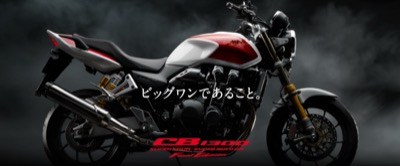
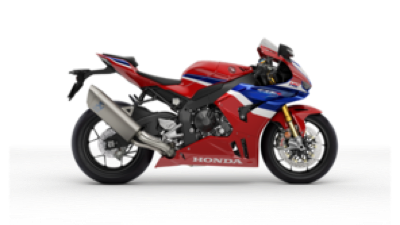
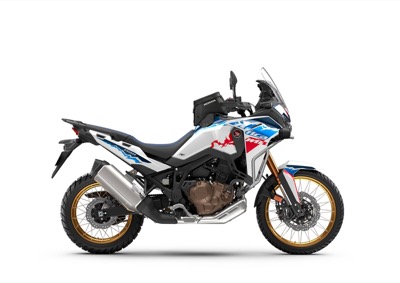
Honda's visual language strategy is defined by breadth over depth. Where Ducati commits entirely to performance and Harley commits entirely to heritage, Honda's imagery spans the widest product range: from the 50cc Cubs that outsell every other motorcycle globally, to the Africa Twin adventure flagship, to the CBR superbike.

This breadth creates a visual language that is accessible, honest, and universally approachable — but also one that struggles to communicate strong desire or aspiration at the premium end. Honda imagery rarely makes you want to be the rider. It makes you want to ride.
View matching images in Research Dashboard
honda-de-c1_r.png
honda-cb750-hornet-action-05.jpg
honda-jp-cl500_sp.jpg
honda-jp-Rebel1100_main_05-2.png
honda-jp-NX400_pc.jpg
honda-jp-CB1300_SUPER_FOUR_pc.jpg
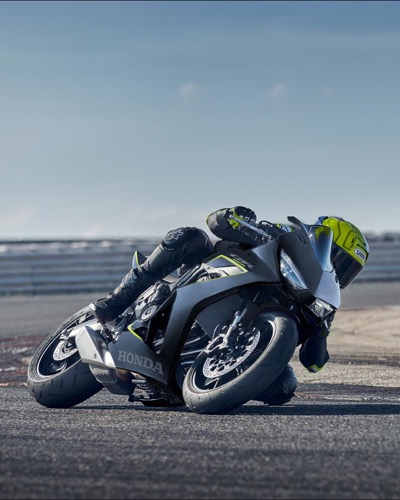
honda-cbr1000rr-fireblade-sp-2024.png
3836271505756132492_3836271408792252936.jpg
02

Visual Aesthetic

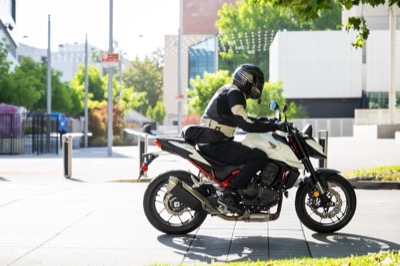
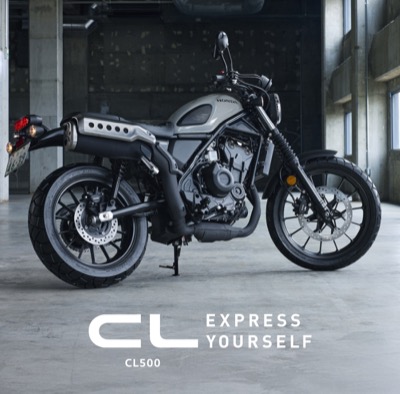
Honda's visual feel is clean, clear, and informative. Images prioritize product communication over emotional narrative. Light is even and well-exposed. Backgrounds are contextual but not overwhelming. The bike is always the subject, never the vehicle for a larger story.

This approach serves Honda's mass-market strategy well but creates challenges at the premium tier where desire, not just product information, drives purchase decisions. The Africa Twin content shows Honda attempting to build adventure aspirational imagery — and succeeding more than any other Honda segment.
View matching images in Research Dashboard
honda-de-c1_r.png
honda-cb750-hornet-action-05.jpg
honda-jp-cl500_sp.jpg
honda-jp-Rebel1100_main_05-2.png
honda-jp-NX400_pc.jpg
honda-jp-CB1300_SUPER_FOUR_pc.jpg
honda-cbr1000rr-fireblade-sp-2024.png
3836271505756132492_3836271408792252936.jpg
03

Colour System

Honda's color DNA is the most neutral of all five brands: Grey (30%) dominates — the highest grey presence in the competitive set. White (14%) and black (12%) complete a neutral foundation of 56%. Honda Red appears as a structural element at 9% — on logo, Wing badge, and some livery options — but the brand does not lead visually with red in the way Ducati does.

Orange (14%) comes from the Africa Twin's adventure livery and Rebel content, providing the warmest signal in an otherwise cool palette. Blue (13%) reflects Honda's extensive use of blue sky in outdoor product photography.

Computed Color DNA — 585 images analyzed

#f7f7f7 14.0%
#282428 12.1%
#0b0a0c 10.3%
#443f43 10.2%
#aeb1b3 10.0%
#665a53 9.9%
#d3d0cc 9.0%
#72777d 7.4%
42%Dark
14%Light
25%Warm
15%Cool
→ View full color analysis in Research Dashboard
#888888
Honda GreyDominant at 30%. The most neutral brand base in this analysis. Consistent, democratic, un-dramatic.
#CC0000
Honda RedThe Wing badge signal. Present but not dominant — used for logo, racing livery, Rebel accents. Identity anchor, not field color.
#E07820
Adventure OrangeAfrica Twin, Rebel. The warmest signal in Honda imagery — used to signal adventure and accessibility together.
#4A7FC1
Outdoor BlueSky backgrounds in outdoor product content. The brand's most-used environmental color.
04

Light & Atmosphere

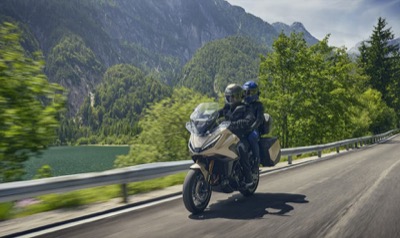
Honda's lighting is practical and even. The brand avoids extreme lighting conditions — no golden-hour obsession like Harley, no dramatic dark studio like Ducati, no dusty trail conditions like KTM. Honda images are well-lit, which means detail is visible and the product reads clearly.

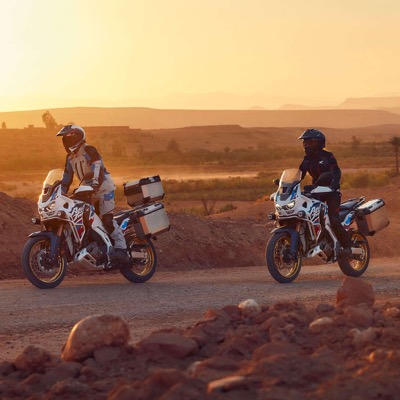
This is effective for product communication but creates emotional flatness. The Africa Twin is an exception — Honda's adventure content embraces more dramatic natural light, golden hour appears, and the Africa Twin is shot in genuinely remote terrain.
View matching images in Research Dashboard
20260210_1024likes_adventure_DUjGaElkni0_01.jpg
honda-c5.jpg
honda-africa-twin-hero-05.jpg
3849168983358885086_3849168944133727239.jpg
honda-jp-NT1100_gallery_10.jpg
honda-jp-NT1100_color_01.png
05

Composition

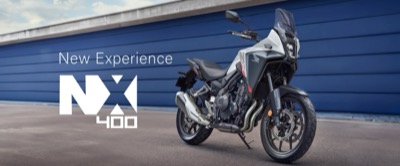
Honda compositions are product-centric and balanced. The bike typically occupies 60–70% of the frame, centered or near-centered, with a contextual background that reinforces the use case without dominating.

Dynamic angles are used for CBR/performance content but are less common than with Ducati or KTM. Honda's composition grammar is that of a product catalog elevated by quality photography — honest, clear, and without visual deception.
View matching images in Research Dashboard
honda-de-c1_r.png
honda-cb750-hornet-action-05.jpg
honda-jp-cl500_sp.jpg
honda-jp-Rebel1100_main_05-2.png
honda-jp-NX400_pc.jpg
honda-jp-CB1300_SUPER_FOUR_pc.jpg
06

Model Portfolio

Top models: Rebel (53), Africa Twin (41), CRF (22), NT1100 (22), CBR1000 (19).

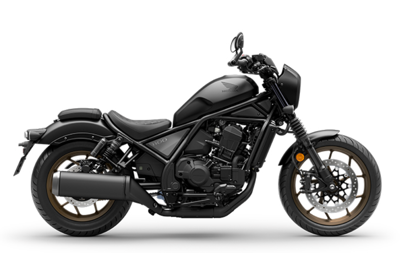
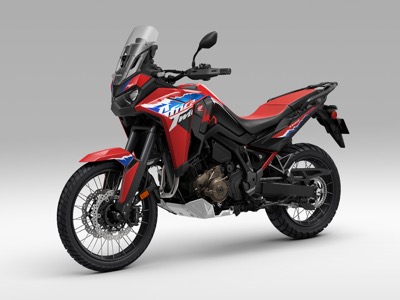
The Rebel's dominance (53 images) is interesting — it is Honda's most lifestyle-oriented model, targeting a younger, urban-adjacent audience. The Africa Twin competes with BMW's GS family and KTM's adventure bikes, with a notably more approachable visual treatment than either competitor.
View matching images in Research Dashboard
20260210_1024likes_adventure_DUjGaElkni0_01.jpg
honda-c5.jpg
honda-africa-twin-hero-05.jpg
3849168983358885086_3849168944133727239.jpg
honda-jp-NT1100_gallery_10.jpg
honda-jp-NT1100_color_01.png
07

People & Casting

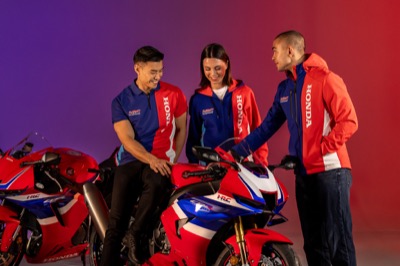
Honda's casting is the most diverse and accessible of all five brands. Men and women, multiple ethnicities, wide age range, varied body types. Rider gear ranges from full protection to casual — reflecting the breadth of Honda's rider community.

This diversity is genuine brand values communication, not just box-checking. Honda truly sells to the widest demographic range of any motorcycle manufacturer, and its casting reflects that commercial reality.
View matching images in Research Dashboard
3840656935096183843_3840656901348825845.jpg
20260223_334likes_uncategorized_DVGX3iMjogn_01.jpg
20260308_175likes_heritage_DVloR3eln3P_01.jpg
3849129845444606350_3849129825060308687.jpg
3858848685279792807_3858848578634836636.jpg
20260316_90likes_challenge_DV8EhmHFjjM_02.jpg
08

Social Media Behavior

Honda's channel balance: website at 52%, Instagram at 21%, Facebook at 9%. A relatively standard distribution for a large OEM with a content-rich product website.

Instagram content (124 images) trends toward the Rebel and Africa Twin — Honda's two most visually compelling lifestyle models. The CBR performance content is somewhat underrepresented on social, suggesting Honda accepts that it cannot out-aspirational Ducati in the performance visual space.
View matching images in Research Dashboard
3840656935096183843_3840656901348825845.jpg
20260223_334likes_uncategorized_DVGX3iMjogn_01.jpg
20260308_175likes_heritage_DVloR3eln3P_01.jpg
3849129845444606350_3849129825060308687.jpg
3858848685279792807_3858848578634836636.jpg
20260316_90likes_challenge_DV8EhmHFjjM_02.jpg
09

Competitive Position vs BMW Motorrad

Honda and BMW overlap most at the Exploration/adventure segment (Africa Twin vs GS) and increasingly at Ease/urban (Rebel, urban mobility vs BMW CE). Honda's visual advantage is accessibility and approachability; BMW's is premium aspiration and engineering authority.

Honda Advantages

  • Widest global reach — most democratic motorcycle brand
  • Africa Twin: strong Exploration credentials at lower price
  • Rebel: best-selling middleweight in multiple markets
  • Perceived reliability: strongest brand trust scores
  • Wing badge: one of motorcycling's most recognized marks

BMW Motorrad Response

  • Premium positioning: aspiration Honda cannot match
  • GS: adventure heritage that Africa Twin has not yet earned
  • R 18: BMW's clearest point of heritage differentiation
  • Technology narrative: radar, semi-auto, connectivity
  • Research dashboard: View Honda imagery →